

Sports
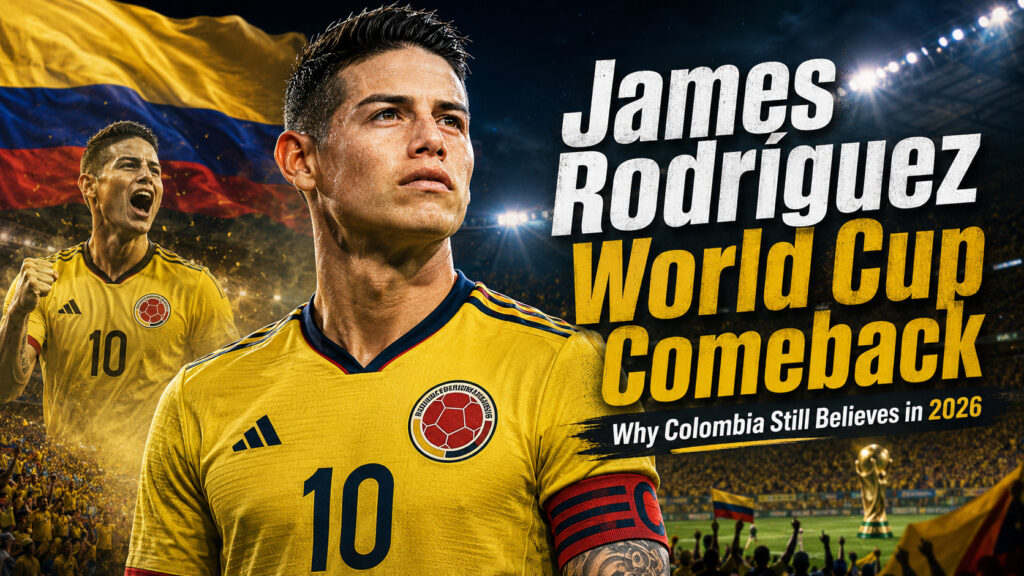
James Rodríguez World Cup Comeback Gives Colombia Fresh Hope in 2026
Jun
James Rodríguez World Cup comeback brings Colombia back to familiar magic
James Rodríguez World Cup stories never feel ordinary. They arrive with memory, pressure, nostalgia, and possibility. In 2014, James Rodríguez became one of the defining faces of the tournament in Brazil, scoring spectacular goals, winning the Golden Boot, and turning Colombia into one of the most exciting teams in international football. Twelve years later, the scene is different, the player is older, and the expectations around Colombia have changed. Yet the emotional pull of the James Rodríguez World Cup comeback remains powerful.
At the 2026 FIFA World Cup, James Rodríguez is no longer the young superstar who shocked the world. He is the veteran captain, the creative reference point, and the player whose club career has taken unexpected turns but whose connection with Colombia has never really faded. That is why the James Rodríguez World Cup comeback feels bigger than one player being named in a starting lineup. It feels like the continuation of a national football story that began with joy, passed through disappointment, and now has one more chance to create something meaningful.
Colombia’s opening Group K win over Uzbekistan placed James back under the global spotlight. For younger fans, it was a chance to see why he has long been treated as a special player in Colombian football. For older fans, it was a reminder of Brazil 2014, when every touch seemed dangerous and every left-footed delivery carried the feeling that something unforgettable could happen. For Colombia, it was about more than nostalgia. Néstor Lorenzo’s team needs balance, creativity, calm decision-making, and leadership. Even at 34, James still offers those qualities.
The central question around Colombia in 2026 is simple: can the James Rodríguez World Cup comeback still shape a tournament? The answer may not be simple. He may not run like a younger midfielder. He may not press with the intensity of modern attacking midfielders. He may not dominate every minute. But football at the World Cup is not only about running. It is about timing, control, experience, set pieces, emotional authority, and the ability to turn one moment into a national memory. That is why Colombia still believes in him.
For Colombian supporters following every step of the tournament, the return of James also reconnects the national team with its visual identity: yellow shirts, loud crowds, flags, and the belief that this team can make people dream again. Fans wanting to show that connection can support the team with a Colombia Home World Cup 2026 Custom Jersey, a natural match for a tournament built around pride, memory, and national passion.
The James Rodríguez World Cup story is not just about one player coming back. It is about Colombia returning to the biggest stage after missing Qatar 2022. It is about a squad trying to prove that the country’s golden football memory still has a place in the modern game. It is about a veteran No. 10 trying to show that intelligence, timing, and left-footed precision can still decide matches when the world is watching.
Why James Rodríguez still defines Colombia’s World Cup identity
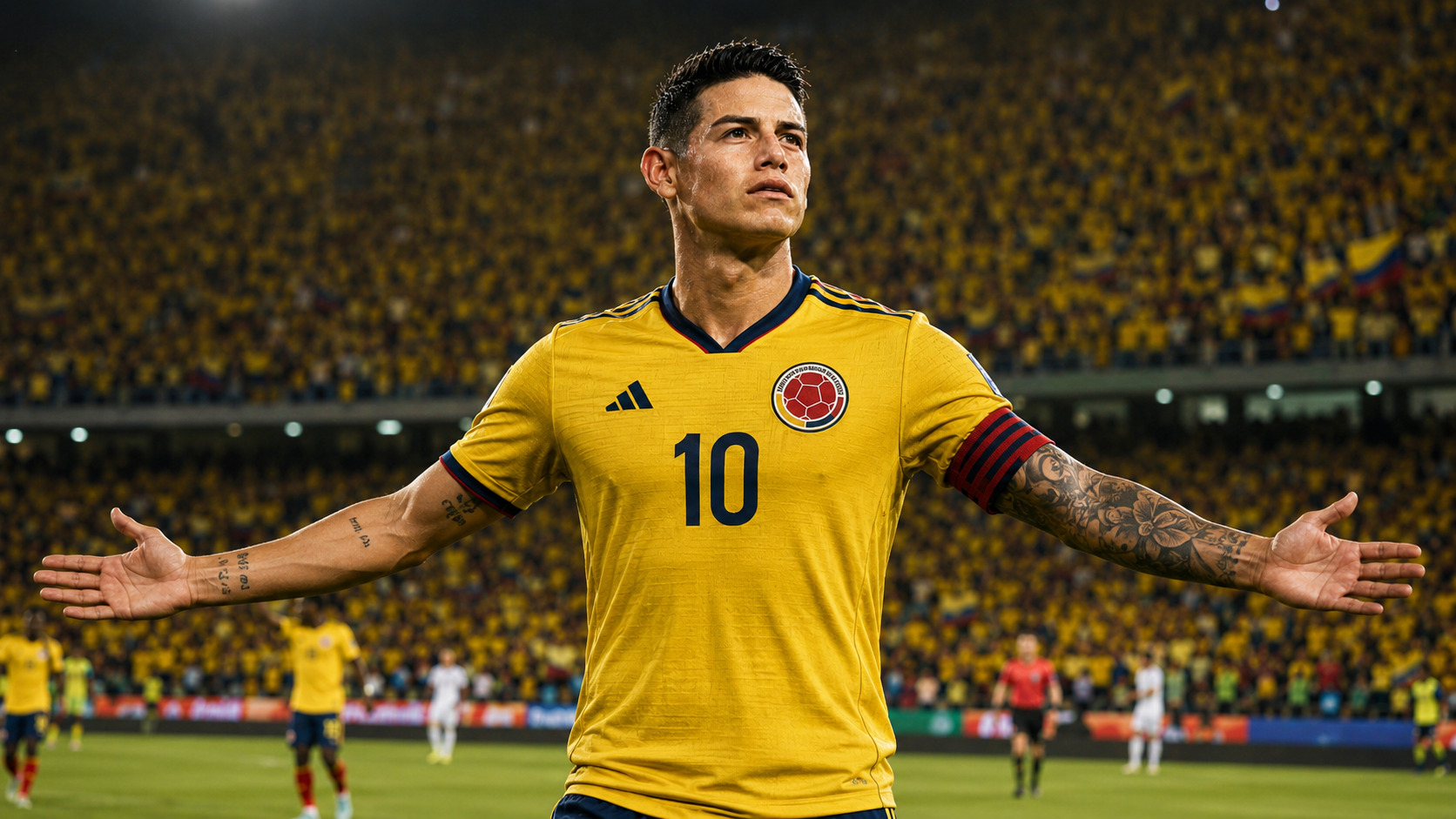
Every national team has players who become bigger than tactics. For Colombia, James Rodríguez is one of those figures. Carlos Valderrama represented an earlier era of flair, rhythm, and personality. Radamel Falcao carried the dream of a world-class striker. Juan Cuadrado gave Colombia years of energy, width, and experience. But James gave Colombia something else: a global moment.
That is why the James Rodríguez World Cup identity remains so strong. His 2014 World Cup was the kind of tournament that changes a player’s life forever. He scored six goals, won the Golden Boot, and produced the famous volley against Uruguay that became one of the great modern World Cup goals. That goal was not only beautiful because of the technique. It mattered because it announced Colombia as a team capable of playing with courage on the biggest stage.
Since then, every World Cup conversation around Colombia has carried James’ name somewhere inside it. Even when his club form dipped, even when injuries slowed him, even when he moved between leagues and projects, his national-team aura remained. Colombia supporters have seen enough to know that James with the national shirt is different. He sees passes earlier. He accepts responsibility. He understands the emotional rhythm of the team.
That is why the James Rodríguez World Cup comeback in 2026 matters. Colombia are not only trying to compete; they are trying to reconnect with the feeling of being dangerous, expressive, and fearless. James represents that identity. His left foot is still a symbol of imagination. His set-piece delivery still gives Colombia a route to goal. His ability to slow the game down still gives the team a different tempo when matches become chaotic.
In a tournament where many teams rely on pace, pressing, and physical power, James offers Colombia a different weapon: clarity. That word is important. It explains why a coach can still trust a player who may not cover as much ground as others. James can take a disorganized possession and make it meaningful. He can receive under pressure, turn away from danger, and find the pass that changes the angle of attack. In tight World Cup matches, that can matter more than statistics.
The James Rodríguez World Cup story is also about trust. Colombia trust him because he has delivered before. Supporters trust him because he has given them memories that still feel fresh. Teammates trust him because he can turn small spaces into chances. Coaches trust him because he gives the team a brain in the final third. That combination explains why he remains central to Colombia’s 2026 hopes.
Colombia’s return after missing Qatar 2022
Colombia’s 2026 World Cup campaign carries the weight of absence. Missing the 2022 World Cup in Qatar hurt deeply. For a football nation that had grown used to seeing itself on the global stage, that failure created a sense of unfinished business. It also changed the emotional meaning of 2026. This is not simply another tournament. It is a return.
That return makes the James Rodríguez World Cup comeback even more symbolic. He played in Colombia’s previous World Cup era, and now he bridges that past with a new generation. Luis Díaz is the obvious modern star. Daniel Muñoz, Jefferson Lerma, Jhon Arias, Luis Suárez, Jhon Córdoba, and others give Colombia depth, variety, and athleticism. But James remains the player who connects the new Colombia with the one that captured the world’s imagination.
For supporters, that matters. International football is built on continuity as much as form. Fans remember moments. They remember where they were when James scored against Uruguay. They remember the celebration, the tears, the yellow shirts, and the feeling that Colombia could stand with anyone. In 2026, those memories do not guarantee success, but they create emotional fuel.
The challenge for Lorenzo is to make sure the emotion serves the football. The James Rodríguez World Cup comeback cannot be based only on what he did in 2014. He must help the 2026 team function. That means using him in spaces where he can receive the ball, connect with runners, deliver from set pieces, and dictate the final-third rhythm without leaving Colombia exposed defensively. It also means surrounding him with players who can cover ground, attack space, and protect transitions.
The good news for Colombia is that the squad has those profiles. Luis Díaz can stretch defenses from wide areas. Luis Suárez and Jhon Córdoba give different center-forward options. Jhon Arias brings intelligence between lines. Jefferson Lerma adds steel and aerial presence. Daniel Muñoz provides power from full-back or wing-back zones. In that structure, James does not need to do everything. He needs to do the things only he can do.
That is the most realistic way to understand the James Rodríguez World Cup role in 2026. He is not expected to be the youngest, fastest, or most physically dominant player. He is expected to be the player who gives Colombia quality at the exact moment a match needs it.
Colombia vs Uzbekistan and the pressure of the first match
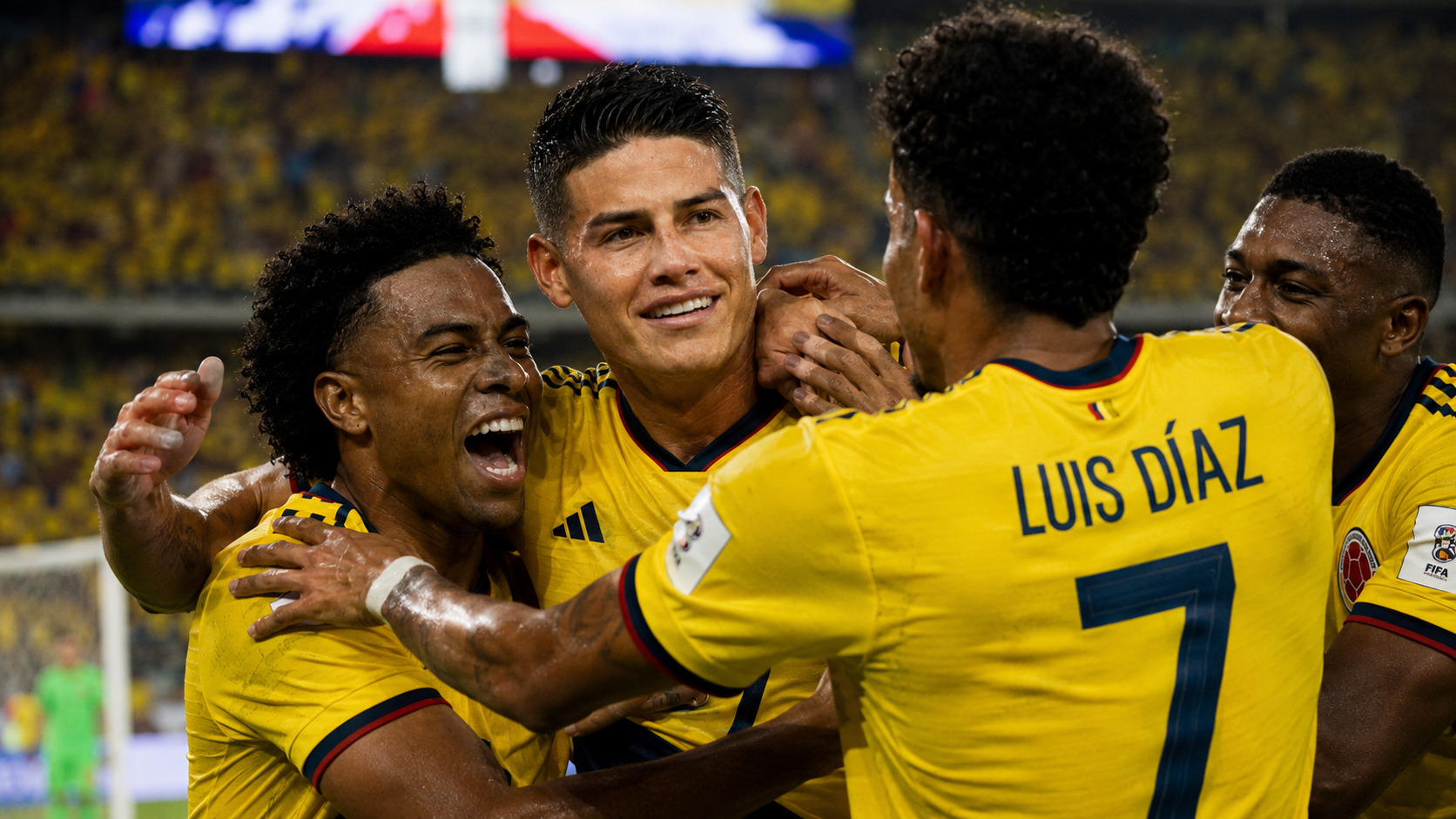
Opening matches at the World Cup are dangerous. Favorites often begin cautiously. Debutants often play with freedom. Underdogs can turn the first 20 minutes into a fight for rhythm. That is why Colombia’s match against Uzbekistan was more complicated than the names suggested.
Uzbekistan arrived at the World Cup as a debutant, but not as a team to dismiss. Their squad had structure, discipline, and a clear counterattacking threat. Eldor Shomurodov gave them experience and leadership up front, while Abdukodir Khusanov offered defensive quality. Teams making their first World Cup appearance often carry a unique kind of energy. They know the world is watching. They know they have nothing to lose. They know one organized performance can change how people talk about them.
For Colombia, that made the opener a test of maturity. The team had to control emotion without becoming passive. It had to respect Uzbekistan without playing with fear. It had to use the crowd, not become overwhelmed by it. In Mexico City, with thousands of Colombian supporters creating a home-like atmosphere, the responsibility was enormous.
This is where the James Rodríguez World Cup experience becomes clear. A player with World Cup history understands the first match differently. He knows that the opening game is rarely perfect. He knows that rhythm can take time. He knows that the crowd’s excitement can sometimes push players into rushed decisions. His role is not only to create chances but also to manage the emotional temperature of the team.
Colombia’s 3-1 win over Uzbekistan gave the team an important start in Group K. It also gave Lorenzo proof that Colombia can carry expectation, deal with pressure, and still find enough quality to win. The result mattered because Colombia’s next matches against DR Congo and Portugal will demand even more. Starting with three points changes the tone of the group. It gives Colombia room to build instead of immediately chasing.
The James Rodríguez World Cup comeback benefits from that kind of platform. A win allows the conversation to focus on Colombia’s potential rather than panic. It allows James to grow into the tournament rather than answer criticism after one difficult result. It allows the team to build around confidence, not fear.
For a player with James’ history, that matters. The opening match was not about recreating 2014 in one night. It was about showing that the James Rodríguez World Cup chapter in 2026 can still have purpose. Colombia needed calm, and James gives calm. Colombia needed direction, and James gives direction. Colombia needed a senior figure who understands the moment, and James remains that figure.
James Rodríguez and Luis Díaz: Colombia’s old magic meets new power
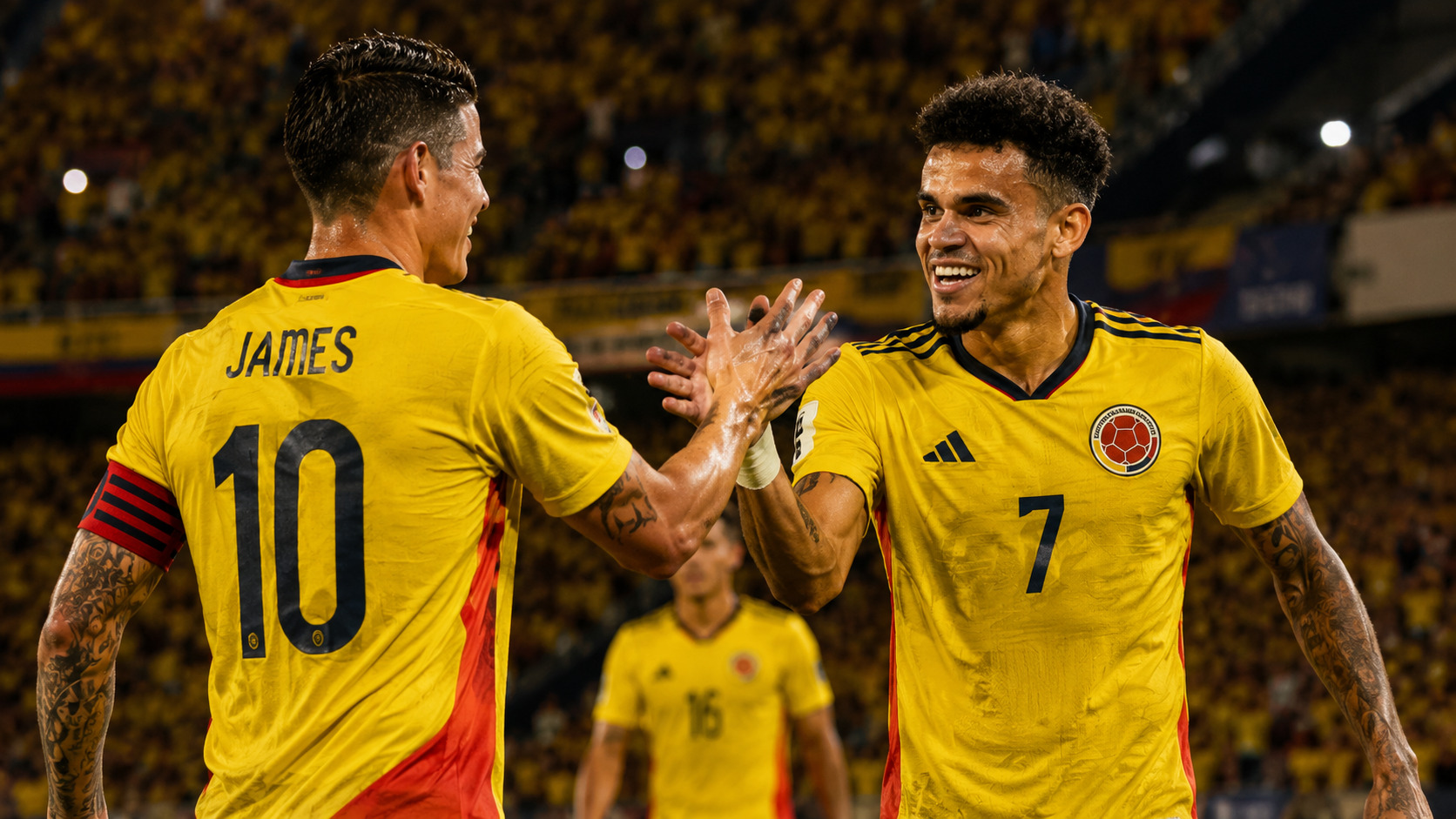
The partnership between James Rodríguez and Luis Díaz may define Colombia’s ceiling in 2026. They are different types of stars, and that difference is exactly what makes the combination interesting.
James is a creator. He wants angles, timing, and control. He can play the pass before the defense realizes the danger. He thrives when movement happens ahead of him. Díaz is chaos in motion. He attacks defenders, breaks lines through dribbling, and forces opponents to retreat. He can turn a slow possession into a direct threat with one acceleration.
Together, they give Colombia both imagination and disruption. James can find Díaz early. Díaz can create space for James by dragging defenders wide. When Díaz beats his marker, Colombia’s attacking midfielders and forwards can attack the box. When opponents double-team Díaz, James can exploit the space that opens inside.
This is why the James Rodríguez World Cup comeback is not only about James himself. It is also about how he helps Colombia’s best current attacker. Díaz is now the player most opponents fear in open space. But even the fastest winger needs service. He needs the ball at the right time, in the right area, before the defense can settle. James can provide exactly that.
Modern international football often comes down to how teams create advantages against compact defenses. Some teams do it through full-back overloads. Some rely on pressing and turnovers. Colombia can do it by combining James’ passing vision with Díaz’s one-on-one threat.
The emotional side matters too. James has publicly backed Díaz as one of Colombia’s great hopes. That says something about the transition inside the team. This is not a battle between eras. It is a handoff. James remains respected, but Díaz is now the explosive figure most likely to decide matches through pace and directness. Colombia’s best version is not James or Díaz. It is James with Díaz.
If Colombia go deep in the tournament, that relationship will likely be central. James may not score six goals like he did in 2014. He may not need to. If he creates chances, controls tempo, and helps Díaz receive the ball in dangerous spaces, the James Rodríguez World Cup comeback can still become one of the defining stories of Colombia’s tournament.
The idea of a “James Rodríguez and Luis Díaz swap” is also useful when describing Colombia’s attacking balance. James can drift into creative spaces while Díaz stretches the field. Díaz can attract pressure while James waits for the next passing lane. When the two are connected, Colombia look less predictable and more dangerous.
Why set pieces could make James decisive again
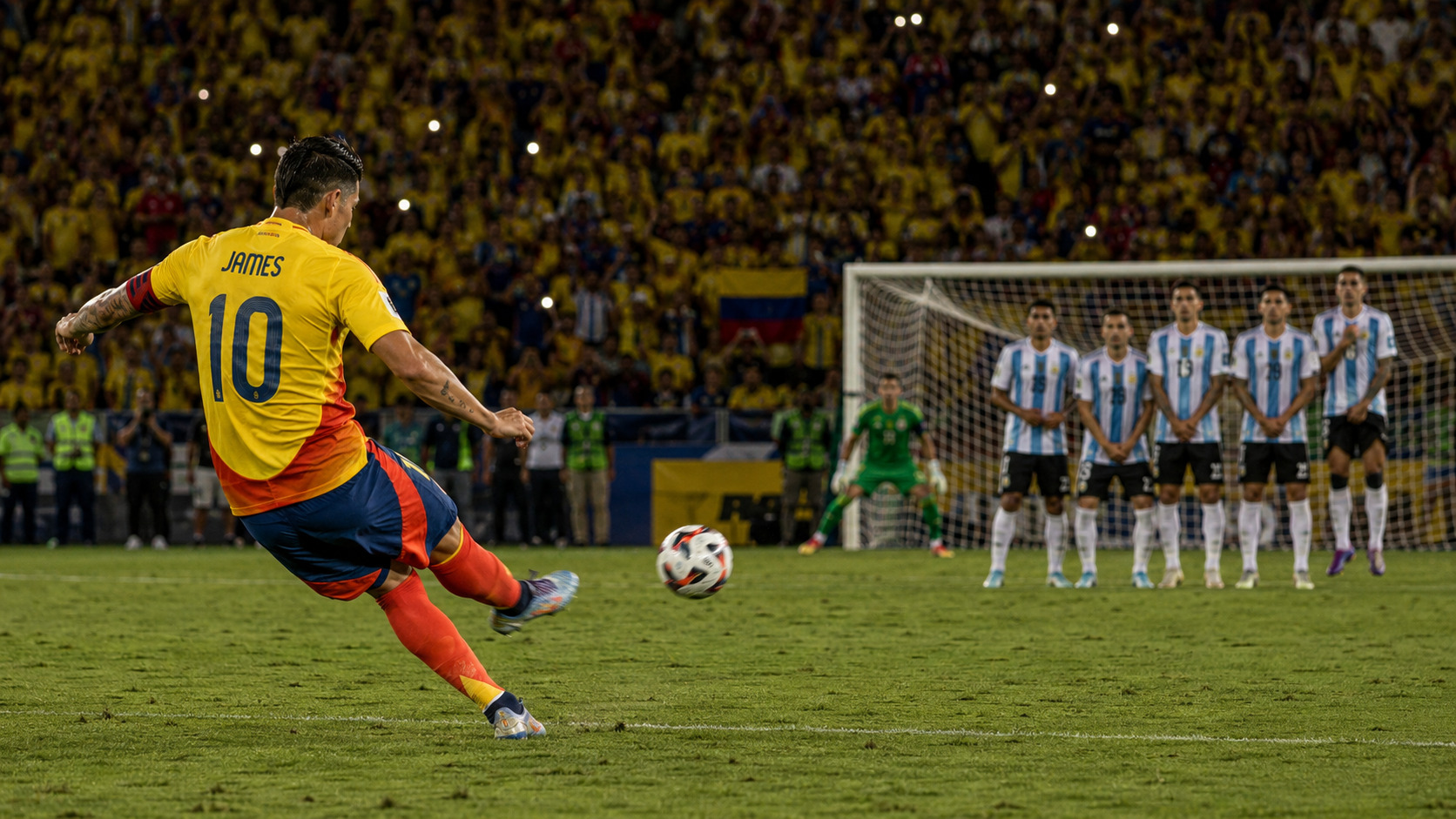
At the World Cup, set pieces are never secondary. Corners, free kicks, and wide deliveries often decide matches between evenly matched teams. Knockout football especially rewards teams that can turn dead-ball situations into real chances. This is one of the biggest reasons the James Rodríguez World Cup role still matters.
His delivery remains one of Colombia’s most valuable weapons. A left-footed set-piece specialist can change the geometry of a match. Inswinging corners, clipped free kicks, and disguised deliveries force defenders to make difficult decisions. Colombia also have aerial targets who can attack those balls. Jefferson Lerma, Davinson Sánchez, and the center-forward options all give Colombia presence in the box.
James proved at the 2024 Copa América that his set-piece value is not just a memory. He was named the tournament’s best player and set a record with six assists. That performance reminded everyone that his creative game remains elite when he is placed in the right structure. Even if his club career no longer carries the glamour of Real Madrid or Bayern Munich, his international productivity remains difficult to ignore.
That is the key difference between reputation and role. The James Rodríguez World Cup comeback is not happening only because of his name. It is happening because his specific skills solve specific problems. Colombia need chance creation. Colombia need controlled possession. Colombia need set-piece threat. James provides all three.
In tight group-stage matches, one corner can open the tournament. One free kick can settle nerves. One delivery to the back post can turn pressure into a lead. James gives Colombia that possibility every time the ball is placed near the box.
This is especially important against opponents who defend deep. Uzbekistan showed how difficult a disciplined team can be to break down. DR Congo may bring physical resistance. Portugal may force Colombia to survive long spells without the ball. In those matches, set pieces can become a shortcut to danger. James gives Colombia that shortcut.
The James Rodríguez World Cup value is therefore not limited to open play. Even when Colombia struggle to create clear chances, James gives them another route. In tournament football, that kind of specialist quality can be decisive.
The club-career question: why Colombia still trusts him
One of the most discussed parts of the James Rodríguez World Cup comeback is the gap between his club career and his national-team importance. At club level, his journey since the peak years has been uneven. After starring for Porto, Monaco, Real Madrid, and Bayern Munich, he moved through several chapters that did not always bring consistent minutes or long-term stability.
For many players, that would be a major concern. For James, it is still a concern, but not a complete argument against him. The reason is simple: international football has its own logic. Some players fit their national teams better than their clubs. Some players carry a different emotional authority when they play for their country. Some players are built for tournament moments more than week-to-week league demands.
James belongs in that category. His game has never been based mainly on covering huge distances. At his best, he is about decision-making, touch, vision, and execution. Those qualities can survive age better than pure athleticism. Of course, the physical side still matters. If he cannot press, recover, or maintain intensity, Colombia must adjust around him. But if he is fit enough to occupy the right spaces and sharp enough to make the final pass, he remains useful.
Lorenzo’s challenge is to manage that balance honestly. James should not be forced into a role that exposes his limitations. He should not be asked to play like a box-to-box midfielder. He should not be expected to carry every transition. Instead, Colombia need to use him as a creative hub, especially in moments when the team has possession or needs a controlled final action.
That is how veteran playmakers extend their relevance. They adapt. They choose moments. They let younger legs stretch the game while they control the rhythm. If James does that well, Colombia can benefit from his experience without becoming dependent on his physical output.
The James Rodríguez World Cup comeback should therefore be judged by impact, not by old expectations. He does not have to look like the player from 2014. He has to help the 2026 version of Colombia win matches.
This is where some critics miss the point. Colombia are not asking James to be a winger, a ball-winning midfielder, or a 90-minute pressing machine. They are asking him to provide creative quality. They are asking him to deliver final balls. They are asking him to turn possession into danger. That is why the James Rodríguez World Cup discussion remains relevant.
Néstor Lorenzo’s tactical puzzle
Néstor Lorenzo has built a Colombia team with ambition, flexibility, and belief. But fitting James Rodríguez into a modern World Cup side requires careful tactical planning.
The first question is shape. James can operate as a No. 10, a right-sided playmaker drifting inside, or an advanced midfielder in a possession structure. Each role changes Colombia’s balance. As a central No. 10, he can connect directly with the striker and both wingers, but Colombia need defensive cover behind him. As a right-sided playmaker, he can cut inside onto his left foot and open passing lanes, but the full-back must provide width. As a deeper creator, he can influence buildup, but Colombia risk losing his final-third sharpness.
The second question is pressing. Against strong teams, especially Portugal in Group K, Colombia cannot afford passengers without the ball. If James starts, the team around him must press intelligently. That does not mean he must sprint constantly. It means the pressing scheme must guide opponents into areas where Colombia can win the ball. James can help by positioning himself well, cutting passing lanes, and forcing play toward more aggressive teammates.
The third question is transition defense. When Colombia attack with Díaz, Muñoz, and other forward runners, they can leave space behind. If James loses the ball in central areas, opponents can break quickly. That makes midfield protection vital. Lerma, Richard Ríos, Kevin Castaño, or other midfield options must provide the legs and structure that allow James to take creative risks.
The fourth question is game state. James may be more useful in some match situations than others. If Colombia need to break down a low block, he is essential. If Colombia are protecting a lead against a high-pressing opponent, Lorenzo may need to manage his minutes. That is not a weakness; it is tournament management. The best World Cup coaches know when to lean on experience and when to refresh the team.
The James Rodríguez World Cup comeback will depend heavily on these tactical choices. Colombia cannot simply place him on the pitch and expect memory to become performance. They must create the conditions for his passing, vision, and set-piece quality to matter.
That means Lorenzo must protect James without limiting Colombia. The midfield must be athletic enough to cover space. The attack must be fast enough to stretch opponents. The full-backs must time their forward runs. If Colombia get that balance right, the James Rodríguez World Cup role can be a major strength instead of a tactical risk.
Group K stakes: Uzbekistan, DR Congo, and Portugal
Colombia’s Group K path is not simple. Uzbekistan brought the unpredictability of a debutant. DR Congo offer physicality, athleticism, and a difficult matchup profile. Portugal bring elite experience, technical quality, and one of the most dangerous squads in the tournament.
That makes every point important. In the expanded 2026 format, the group stage offers more routes to the knockout rounds, but that should not make Colombia comfortable. Finishing strongly in the group can influence the knockout draw, confidence, and squad momentum. A slow start can create pressure before the biggest fixtures.
Colombia’s win over Uzbekistan was therefore more than a routine result. It gave the team control of its early Group K story. It also gave the James Rodríguez World Cup comeback a positive opening chapter. Instead of beginning with doubt, Colombia began with three points and a reminder that this squad can handle the moment.
For James, the group stage is the perfect platform to show his current value. Against Uzbekistan, Colombia needed control and patience. Against DR Congo, they may need composure against physical pressure and defensive transitions. Against Portugal, they may need efficiency, set pieces, and the courage to keep the ball under pressure.
The Portugal match is especially fascinating. It could become a test of Colombia’s true ceiling. Can they compete with one of Europe’s strongest teams? Can their midfield handle elite technical pressure? Can Díaz and James punish Portugal’s defensive spaces? Can Colombia’s set pieces become a decisive weapon?
If James plays well in that kind of match, the conversation around him will shift quickly. It will no longer be only about whether he is too old or whether his club minutes matter. It will be about whether Colombia have found the right mix of veteran creativity and modern attacking power.
That is why the James Rodríguez World Cup comeback remains one of the tournament’s most compelling storylines. It is not just about Colombia’s past. It is about Colombia’s path forward.
James Rodríguez as a leader, not just a playmaker
Leadership at a World Cup is not only about speeches. It is about how a player behaves when the match becomes uncomfortable. James Rodríguez has lived almost every version of football pressure. He has been a wonderkid, a superstar signing, a Golden Boot winner, a Real Madrid player, a Bayern Munich player, a player questioned by critics, and a national-team captain. That range of experience gives him perspective.
For Colombia’s younger players, that matters. A World Cup can feel overwhelming. The travel, media attention, crowd noise, tactical detail, and emotional weight are unlike club football. Having a captain who has already been through the highest highs and difficult lows can stabilize the dressing room.
James also carries a certain calm on the pitch. He does not need to play at maximum speed to influence others. His body language, passing choices, and willingness to take responsibility can affect the team’s confidence. When Colombia are nervous, he can ask for the ball. When Colombia are rushed, he can slow the tempo. When Colombia need belief, he can deliver into the box.
That leadership is especially important because Colombia’s squad blends generations. Díaz is now one of the most important attackers, but James still represents the emotional memory of the national team. Lorenzo needs both voices. The best teams often have a balance between current peak performers and experienced leaders who understand tournament pressure.
The James Rodríguez World Cup story is now a leadership story as much as a creative one. He does not need to be the only face of Colombia anymore. That may actually help him. In 2014, the world discovered him and expectations exploded. In 2026, the attention is shared. Díaz carries much of the attacking spotlight. Other players bring club pedigree and tactical importance. James can focus on the moments where his quality is most useful.
In that sense, the James Rodríguez World Cup comeback gives Colombia more than assists and set pieces. It gives the team a senior voice. It gives the group someone who understands pressure, expectation, criticism, and national pride.
Why fans still believe in James
Football supporters are not purely rational, and that is part of what makes international tournaments powerful. Colombian fans believe in James Rodríguez because he gave them something that cannot be measured only by expected goals, pressing data, or minutes played. He gave them wonder.
The 2014 World Cup created a bond that still exists. For many Colombian fans, James is connected to one of the happiest football summers in the country’s history. His goals were not just goals. They were symbols of possibility. They made Colombia feel visible, respected, and thrilling on the global stage.
That kind of emotional capital lasts. It does not mean fans ignore his limitations. Colombian supporters know he is older. They know the game has changed. They know Díaz may now be the team’s most explosive star. But belief in James is not blind nostalgia. It is based on repeated evidence that he performs differently for Colombia.
The 2024 Copa América strengthened that belief. James was not just present; he was excellent. He created goals, led the team to the final, and reminded everyone that international tournaments suit his skill set. That tournament is one of the main reasons the James Rodríguez World Cup role feels legitimate rather than sentimental.
Fans believe because they have seen him do it. They have seen the left-footed cross. They have seen the corner land perfectly. They have seen the through ball split a defense. They have seen him rise emotionally when wearing yellow. Until he proves he cannot do it anymore, Colombia will keep hoping for one more moment.
That is why the James Rodríguez World Cup comeback feels so personal for Colombian supporters. It is not only about analysis. It is about memory, loyalty, and the hope that a great player can still give his country something unforgettable.
This is also why Colombia’s yellow shirt carries so much meaning in 2026. It is not just a kit. It is connected to family watch parties, crowded streets, flags, songs, and the shared dream of another deep tournament run. For supporters who want to carry that feeling beyond matchday, the Colombia Home World Cup 2026 Custom Jersey fits naturally into the moment, especially for fans following James, Díaz, and Colombia through Group K.
The risk of relying too heavily on nostalgia
Still, Colombia must be careful. Nostalgia can inspire, but it can also distort. The James Rodríguez of 2026 is not the James Rodríguez of 2014. Expecting him to repeat that tournament would be unfair and unrealistic. Colombia’s success cannot depend on him becoming a younger version of himself.
The team must avoid building every attack around him. If opponents can mark James out of the game and Colombia have no alternative plan, that becomes a problem. Díaz must remain central. The full-backs must contribute. The midfield must progress the ball. The strikers must occupy defenders. Colombia need a collective attack, not a museum of past glory.
This is where Lorenzo’s management becomes crucial. He must honor James’ quality while protecting the team’s future. If James starts, there must be a clear tactical reason. If he is substituted, it should be seen as normal game management, not disrespect. If he is used from the bench in some matches, that could still be valuable.
The smartest version of Colombia uses James as a weapon, not as a dependency. He can start matches where control and creativity are needed. He can take set pieces. He can mentor younger players. He can influence key moments. But Colombia must remain dynamic enough to survive when the game demands more running, more pressing, or more defensive coverage.
That balance will determine whether the James Rodríguez World Cup comeback becomes a strength or a limitation. Colombia have enough talent to make him part of a modern structure. They should not force the entire structure to become about him.
The point is not to remove nostalgia from the story. Nostalgia is part of why the James Rodríguez World Cup comeback matters. The point is to make sure Colombia use that emotion in a practical way. Memory can inspire the team, but tactics must carry the team.
What James Rodríguez must do to make this World Cup special
For James to make the 2026 World Cup special, he does not need to win the Golden Boot again. He does not need to score a goal as spectacular as the Uruguay volley. He does not need to dominate every headline. His mission is different now.
First, he must stay fit. Availability is the foundation of everything. A veteran player with creative value can only help if he is physically ready for tournament rhythm. That includes recovery, travel, altitude, heat, and short turnarounds between matches.
Second, he must make set pieces count. Colombia have enough aerial and attacking talent to threaten from dead balls. If James delivers consistently, he can create goals even in matches where open-play chances are limited.
Third, he must connect quickly with Díaz. Colombia’s most dangerous attacking route may be James finding Díaz before defensive blocks are fully set. Early switches, diagonal passes, and disguised balls into the channel can give Díaz the isolation he needs.
Fourth, he must choose when to take risks. Creative players lose the ball; that is part of the role. But in World Cup matches, risk selection matters. James must know when to attempt the killer pass and when to recycle possession.
Fifth, he must lead emotionally. Colombia’s return to the World Cup brings excitement and pressure. James can help the team stay calm, especially if matches become tense.
If he does those things, his tournament can be successful even without a flood of goals. The 2026 version of James is not about being the breakout star. It is about being the wise creator who gives Colombia belief and structure.
That is what makes the James Rodríguez World Cup comeback so interesting. It is not a simple repeat of an old story. It is a new chapter with a different role, different responsibilities, and different pressure.
The James Rodríguez World Cup comeback can be special if James accepts exactly what this stage requires from him now: not constant domination, but decisive influence.
Colombia’s ceiling if James and Díaz click
Colombia are not the tournament’s biggest favorite, but they are dangerous. That distinction matters. Favorites carry expectation. Dangerous teams carry threat. Colombia have enough attacking quality, emotional momentum, and tournament experience to trouble stronger opponents if their key players click.
The James-Díaz axis is central to that ceiling. If Díaz is isolated without service, Colombia can become predictable. If James has the ball but no runners, Colombia can become slow. But if the two connect, Colombia can attack in multiple ways. They can build patiently, switch quickly, attack wide, and threaten from set pieces.
Add the physicality of Lerma, the defensive experience of Sánchez, the attacking contribution of Muñoz, and the forward options in the squad, and Colombia have the ingredients to be more than a romantic story. They can be a serious knockout-stage problem.
The question is consistency. Tournament football punishes lapses. Colombia must avoid emotional swings, defensive mistakes, and overreliance on individual moments. James can help with that by bringing control. Díaz can help by bringing explosiveness. Lorenzo must blend both.
If Colombia reach the later rounds, the James Rodríguez World Cup comeback will grow louder. Every match would bring more comparisons with 2014. Every set piece would feel like a possible flashback. Every left-footed pass would carry the memory of what he once did. That is the beauty and burden of his return.
Colombia’s 2026 ceiling depends on more than James, but James can still raise it. He can turn possession into chance creation. He can turn pressure into calm. He can turn a free kick into a goal-scoring opportunity. He can turn a balanced match into a Colombian advantage.
The James Rodríguez World Cup story will become even more powerful if Colombia’s attack grows with every match. If Díaz finds space, if the forwards finish chances, and if James controls the rhythm, Colombia can move from emotional contender to serious threat.
Why the James Rodríguez World Cup story is bigger than one tournament
The World Cup often gives footballers one defining image. For James, that image already exists. It is the chest control and volley against Uruguay. It is the yellow shirt, the perfect strike, and the celebration that followed. But the 2026 tournament gives him a chance to create a different kind of legacy.
This version of the James Rodríguez World Cup story is not about discovery. It is about endurance. It is about a player who has been doubted, moved between clubs, dealt with changing roles, and still found his way back to the biggest stage. It is about a national team that missed the last World Cup and now wants to remind the world of its quality.
For Colombia, James represents the past, but he is not trapped in it. He can still affect the present. That is rare. Many players who create iconic World Cup memories fade from the international stage before they have the chance to return meaningfully. James has returned with a real role, real responsibility, and real expectations.
That makes the story richer. It is not only about whether he can score or assist. It is about whether experience can still matter in a younger game. It is about whether a playmaker can still shape matches without being the fastest player on the pitch. It is about whether football intelligence can survive changing trends.
The answer, for Colombia, may be yes. The James Rodríguez World Cup comeback gives the team a sense of continuity and a tactical tool at the same time. That combination is why he remains important.
For neutral fans, the James Rodríguez World Cup narrative is one of the tournament’s most human stories. It has glory, decline, doubt, loyalty, and return. It reminds people why the World Cup is different from club football. Players do not only represent form. They represent memory, national identity, and the emotional connection between a team and its people.
Conclusion: James Rodríguez still has one more World Cup story to write
James Rodríguez enters the 2026 World Cup as one of the tournament’s most intriguing veterans. He is not here as a rising star. He is not here as a player chasing his first global moment. He already had one of the great individual World Cup runs of the modern era. What makes this chapter compelling is different: he is trying to prove that class, vision, and national-team identity can still matter in a game increasingly dominated by speed and intensity.
Colombia’s return to the World Cup gives his story the perfect stage. The team missed Qatar 2022, rebuilt under Néstor Lorenzo, and arrived in 2026 with a squad that blends experience and new attacking power. Luis Díaz may be the headline force of the present, but James remains the emotional and creative link to Colombia’s most magical modern tournament.
His role will not be simple. He must manage his body, accept tactical adjustments, and produce in decisive moments. Colombia must avoid relying on nostalgia alone. But if used correctly, James can still change matches. He can still provide clarity. He can still deliver the ball that turns pressure into celebration. He can still make Colombian fans believe that something special is possible.
That is why the James Rodríguez World Cup comeback matters. It is not only about one player returning to a famous stage. It is about a nation reconnecting with its football memory while trying to write a new future. In 2014, James gave Colombia magic. In 2026, he has a chance to give them wisdom, leadership, and maybe one more unforgettable moment.
The James Rodríguez World Cup story is not finished. Colombia’s win over Uzbekistan gave it a strong opening chapter. The matches ahead against DR Congo and Portugal will reveal how far this team can go. If James and Díaz click, if Lorenzo finds the right balance, and if Colombia keep turning emotion into performance, this comeback could become one of the most memorable narratives of the 2026 FIFA World Cup.
For Colombia, the road ahead is demanding. For James, the pressure is familiar. For supporters, the dream is alive again. The James Rodríguez World Cup comeback has already reminded the football world of one thing: some players do not need to be at the beginning of their story to still make the world watch.
Home Page: Makvera.com